|
EU-VALUES Network Newsletter #7 - The EU in a Changing World: Ukraine, Security, and Europe’s Global Role ͏ ͏ ͏ ͏ ͏ ͏ ͏ ͏ ͏ ͏ ͏ ͏ ͏ ͏ ͏ ͏ ͏ ͏ ͏ ͏ ͏ ͏ ͏ ͏ ͏ ͏ ͏ ͏ ͏ ͏ ͏ ͏ ͏ ͏ ͏ ͏ ͏ ͏ ͏ ͏ ͏ ͏ ͏ ͏ ͏ ͏ ͏ ͏ ͏ ͏ ͏ ͏ ͏ ͏ ͏ ͏ ͏ ͏ ͏ ͏ ͏ ͏ ͏ ͏ ͏ ͏ ͏ ͏ ͏ ͏ ͏ ͏ ͏ ͏ ͏ ͏ ͏ ͏ ͏ ͏ ͏ ͏ ͏ ͏ ͏ ͏ ͏ ͏ ͏ ͏ ͏ ͏ ͏ ͏ ͏ ͏ ͏ ͏ ͏ ͏ ͏ ͏ ͏ ͏ ͏ ͏ ͏ ͏ ͏ ͏ ͏ ͏ ͏ ͏ ͏ ͏ ͏ ͏ ͏ ͏ ͏ ͏ ͏ ͏ ͏ ͏ ͏ ͏ ͏ ͏ ͏ ͏ ͏ ͏ ͏ ͏ ͏ ͏ ͏ ͏ ͏ ͏ ͏ ͏ ͏ ͏ ͏ ͏ ͏ ͏ ͏ ͏ ͏ ͏ ͏ ͏ ͏ ͏ ͏ ͏ ͏ ͏ ͏ ͏ ͏ ͏ ͏ ͏ ͏ ͏ ͏ ͏ ͏ ͏ ͏ ͏ ͏ ͏ ͏ ͏ ͏ ͏ ͏ ͏ ͏ ͏ ͏ ͏ ͏ ͏ ͏ ͏ ͏ ͏ ͏ ͏ ͏ ͏ ͏ ͏ ͏ ͏ ͏ ͏ ͏ ͏ ͏ ͏ ͏ ͏ ͏ ͏ ͏ ͏ ͏ ͏ ͏ ͏ ͏ ͏ ͏ ͏ ͏ ͏ ͏ ͏ ͏ ͏ ͏ ͏ ͏ ͏ ͏ ͏ ͏ ͏ ͏ ͏ ͏ ͏ ͏ ͏ ͏ ͏ ͏ ͏ ͏ ͏ ͏ ͏ ͏ ͏ ͏ ͏ ͏
The EU-VALUES Newsletter Issue 7
|
The EU in a Changing World: Ukraine, Security, and Europe’s Global RoleInternational politics is increasingly marked by major geopolitical shifts, renewed security challenges, and pressing questions for peace and stability. As global dynamics evolve rapidly, all eyes are on Europe: how the EU responds, adapts and acts will shape not only its own future, but also its role on the world stage. Guided by the purposes and principles of the United Nations Charter, the EU has long framed its external action around preventing conflict, sustaining peace, and supporting post-conflict recovery. Yet Russia’s full-scale invasion of Ukraine has placed these ambitions under unprecedented pressure, accelerating the EU’s transformation into a more explicitly geopolitical actor. With a particular focus on the invasion, the EU-VALUES Network has devoted substantial effort to evaluating the EU’s support for Ukraine. These questions were central to our recent international conference in Jakarta, where Russian aggression featured prominently across a keynote address and high-level roundtables. In this edition, we highlight key insights from the conference discussions - linking Ukraine, multilateralism, and the future of European security - before presenting recent publications and events that advance the EU-VALUES Network’s work on peace, security, and Europe’s evolving role on the world stage.
|
Spotlight: EU-VALUES Conference, Jakarta 2025
|
|
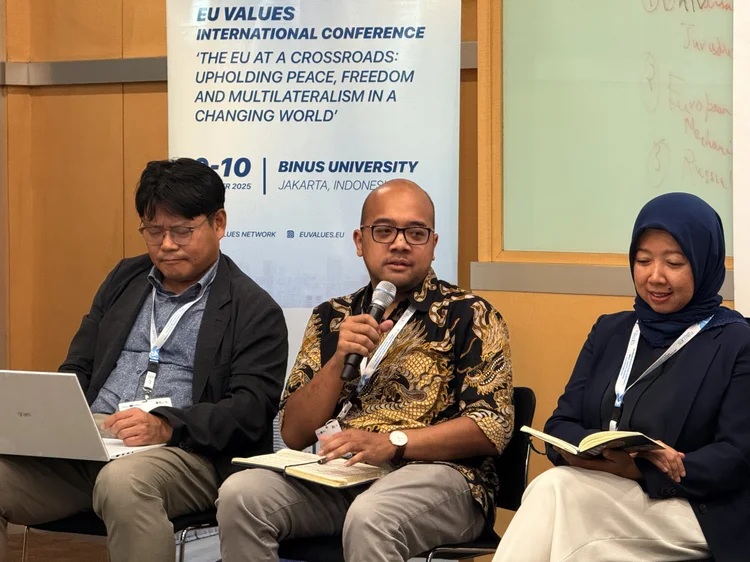
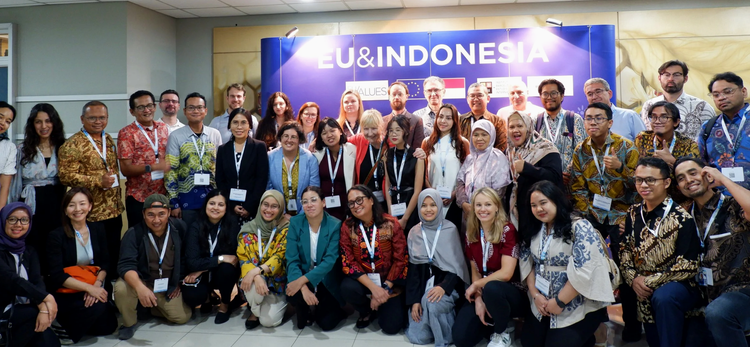
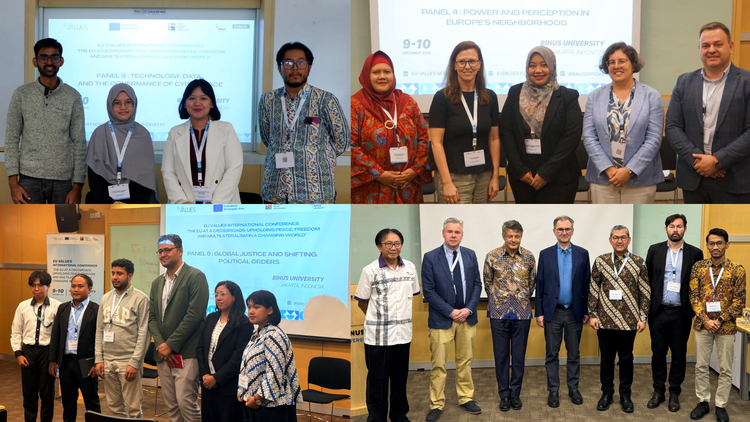
The EU-VALUES International Conference at BINUS University in Jakarta (8 –10 December 2025) examined the EU’s evolving role in a fragmented global order, focusing on how peace, freedom and multilateralism are being challenged by war, geopolitical competition, climate governance, trade, and digital regulation. Across three days of workshops, keynotes, panels and roundtables, the event combined academic exchange with capacity-building - strengthening networks and opening pathways for deeper EU–Indonesia and EU–ASEAN collaboration. The conference began on 8 December with two workshops hosted at BINUS’ Anggrek Campus: the first focused on EU-related teaching and training, while the second addressed EU funding opportunities for Indonesian and Asian students and scholars. Both aspects: teaching on the EU and EU funding opprtunities are core components of the EU-VALUES Network’s mission.
|
|
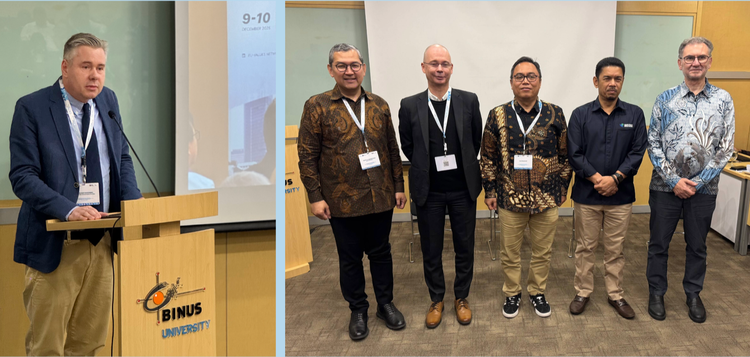
The academic programme formally opened on 9 December at BINUS’ JWC Campus under the theme EU Values and Security, with opening remarks from Prof. Tirta Mursitama, Senior Advisor for Investment Equity and Partnership to the Ministry of Investment and Downstream Industry/Indonesia Investment Coordination Board, EU-VALUES Network coordinator Prof. Jacint Jordana and H.E. Denis Chaibi, the European Union Ambassador to Indonesia and Brunei Darussalam (pictured here).
|
|
|
|
|
|
|
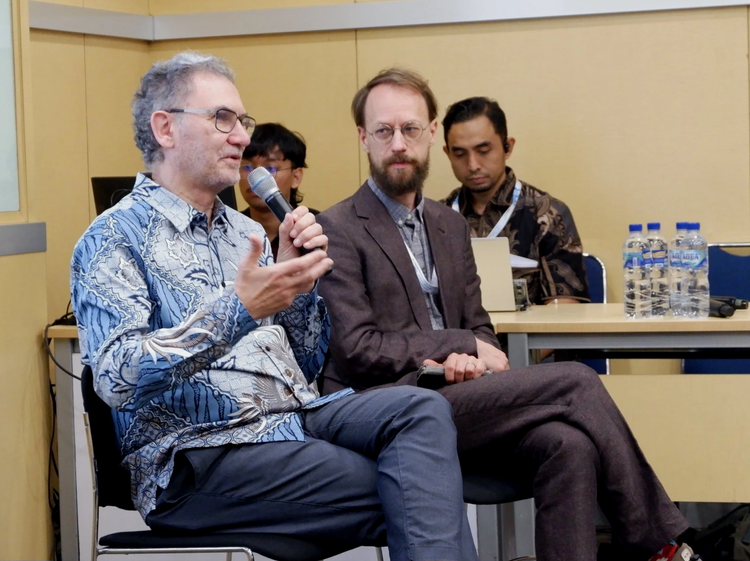
A keynote by Tadeusz Iwański (OSW) on Russia’s war against Ukraine set the tone, framing the conflict as a global inflection point for Europe’s identity, alliances, and credibility (pictured below left). In the framework of academic panels, work from established and novel scholars was presented on the Russia–Ukraine war, the Indo-Pacific, refugee responses and global justice. The second day turned the spotlight to the recently concluded EU–Indonesia Trade Deal, bringing together policymakers and experts for a timely and engaging discussion. The day opened with a keynote address by Johni Martha, Senior Advisor to the Ministry of Trade / Chief Negotiator on Indonesia - EU CEPA. This was followed by a high-level roundtable titled “EU–Indonesia Trade Deal: Opportunities and Challenges”, featuring expert insights from Johni Martha, Tirta Mursitama, Carsten Sorensen (Head of Trade at the EU Delegation in Jakarta, European Commission), and Revindo Mohamad Dian (LPEM-FEBUI, University of Indonesia). The discussion was expertly chaired by Prof. Jacint Jordana (pictured below, right). Recordings of all conference sessions are available on our website and youtube channel, see here.
|
|
EU-VALUES Media Coverage: The conference drew widespread media coverage in Indonesia and beyond, with outlets highlighting BINUS University’s role in hosting more than 80 researchers from around 40 universities worldwide and underscoring the event’s contribution to global dialogue on democracy, peace, and cooperation. Coverage included detailed reports in national media such as APAC Vision, Pacific Posts, Asia Journaux and Seremonia.id among other regional news platforms, showcasing the international reach and impact of the EU-VALUES Network’s work.
|
|
Recent research traces how wartime assistance to Ukraine is reshaping the EU’s strategic posture and external influence (Johansson‐Nogués & Leso 2024), while also revealing emerging domestic and transnational political contestation around the costs, limits, and longevity of support (Holesch & Martill 2026; Sojka et al. 2025). At the same time, scholars are reassessing the drivers of European foreign policy change in response to the war (Martill & Sus 2025), exploring what a post-war European security architecture might look like (Ditrych & Laryš 2025), and examining how the conflict has revitalised enlargement as both a strategic tool and a test of the EU’s institutional resilience (Anghel 2025; Hunter, Wunsch & Bélanger 2025). For more suggested reading, you may like to check out our NEW Repository of recommended publications from the Network here.
|
|

|
Johansson‐Nogués, E., & Leso, F. (2024). Geopolitical EU? The EU's wartime assistance to Ukraine. JCMS: Journal of Common Market Studies, 63(1), 127-14. We also have a podcast episode with Prof. Johansson-Nogués unpacking this article here. |
|
|
|
|
|
Holesch, A., & Martill, B. (2026). War fatigue? The politicisation of the Ukraine war. Journal of European Integration, 1-24. |
|
|
|
|

|
Sojka, A., Terraza, J., Caravaca Crespo, F., & Cuevas Rumín, Á. (2025). Russian invasion as a European issue: Vertical Europeanisation of national political debates and the war in Ukraine. European Union Politics, 26(2), 310-343. |
|
|
|
|

|
Ditrych, O., & Laryš, M. (2025). What can European security architecture look like in the wake of Russia’s war on Ukraine?. European Security, 34(1), 44-64. |
|
|
|
|

|
Anghel, V. (2025). Why the EU is a geopolitical power: Wartime enlargement, integration, and reform. Journal of European Public Policy, 32(12), 2862-2885. |
|
|
|
|
|
Hunter, T., Wunsch, N., & Bélanger, M. E. (2025). A geopolitical turning point? Enlargement discourse after the Russian invasion of Ukraine. European Union Politics, 26(4), 689-713. |
|
|
|
Network Roundup from the Last Quarter:
|
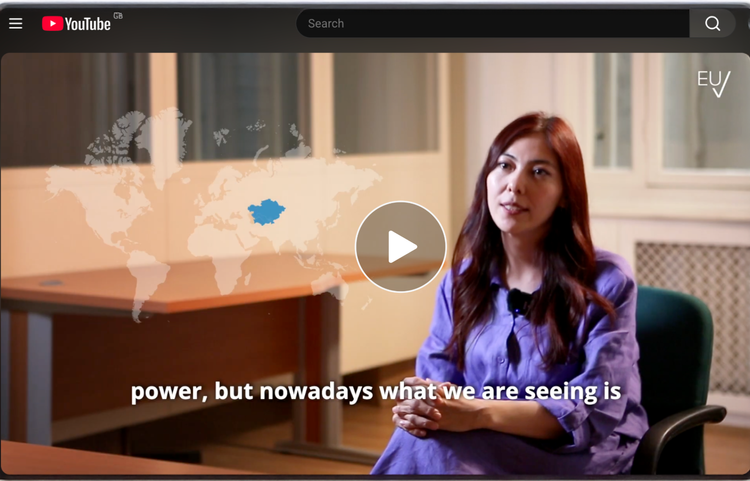
EU-VALUES Talks: The Russia–Ukraine War and Its Implications for Central Asia
|
|
Prof. Assylzat Karabayeva (KIMEP) discusses how the Russia–Ukraine war is reshaping Europe–Central Asia relations, exploring EU–Central Asia engagement, resilience, connectivity, and future alignment. Learn how the EU’s norms, green and digital initiatives, and multilateral efforts could influence stability, sovereignty, and regional cooperation in the coming years. Check out some of other EU-VALUES Talks videos here.
|
|
|
|
Adam Holesch, IBEI
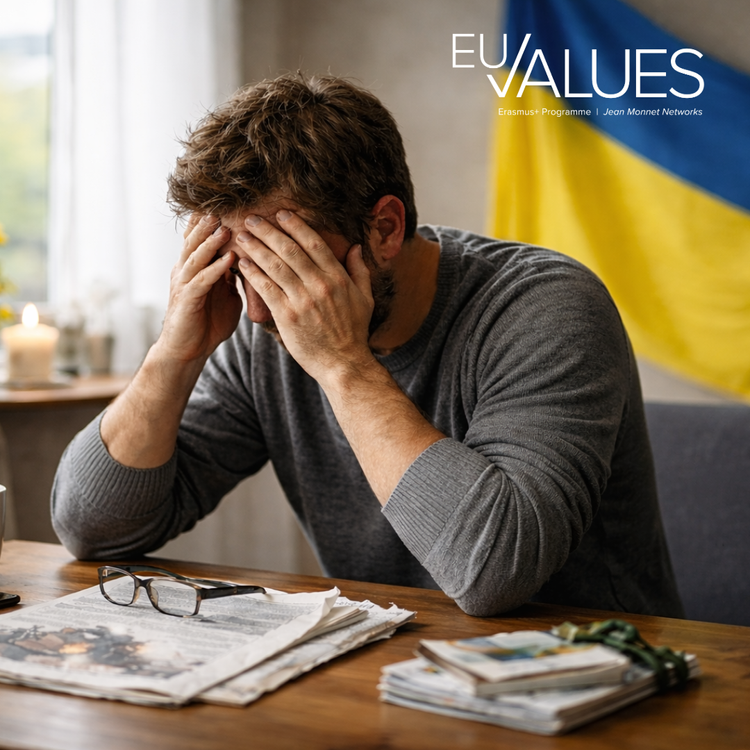
Since Russia’s full-scale invasion of Ukraine in February 2022, Europe’s political order has been forced to recalibrate. Early unity translated into sanctions, military aid, and strong diplomatic backing, yet more than two years later the war’s prolonged nature has made its costs harder to ignore… |
|
|
Other related blog posts:
|
The European Dialogue Podcast:
|
|

|
India, Europe, and the Ukraine War: Perceptions Beyond Brussels: Rahul Desarda (O.P. Jindal) examines how the European Union’s response to Russia’s war against Ukraine is viewed from India and across the Global South, and what these perspectives reveal about the EU’s value-based foreign policy and global credibility. |
|
|
ASEAN, Sovereignty, and Europe’s Values: Sukmawani Bela Pertiwi (BINUS) discusses ASEAN’s political development, its core principles of sovereignty and non-interference, and how these shape the region’s engagement with the European Union — raising critical questions about the EU’s scope to promote human rights in Southeast Asia. |
|

|
|
|
|
|
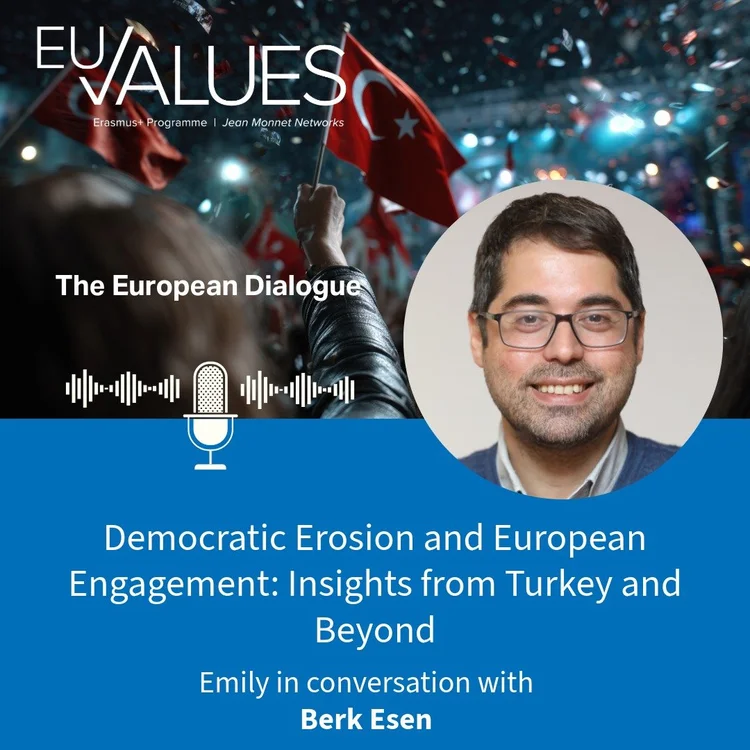
Democratic Erosion and European Engagement: Berk Esen (Sabanci) discusses how do European values hold up in an age of democratic backsliding. Drawing on his research on party politics, authoritarianism, and democratic erosion, the episode explores perceptions of double standards and asks what tools remain for defending democracy globally. |
|
|
Externalising Borders: Europe, Africa, and Migration Control: Mansah Amoah (Pretoria) examines the EU’s externalisation of border control, exploring how partnerships with African states - through funding, training, and security cooperation - shape governance, accountability, and the lived realities of migrants. |
|

|
|
|
Catch up on EU-VALUES Webinars:
|
|
The Russia–Ukraine War and Its Impact on Central Asia | Resilience, Connectivity & Decolonization: This webinar explores how the Russia–Ukraine war is reshaping Central Asia’s geopolitics through The Russia–Ukraine War and Its Implications for Central Asia (Bloomsbury, 2024). Featuring Profs. Karabayeva, Atadjanov, Nuriddenova, and Saz Carranza, the discussion examines resilience, decolonization, and shifting ties with Russia, China, India, and Europe. If you enjoyed this session, you may also like to check out: Saving the EU from Illiberal Member States | Rule of Law, Democracy & European Integration: Prof. András Jakab and Prof. Lando Kirchmair examine the rise of illiberal trends in EU member states and institutions, showing how these dynamics threaten democracy and the rule of law. Prof. Jan Wouters provides expert commentary, exploring the implications for European integration and the future of the EU’s constitutional order. Why Citizens Tolerate Democratic Backsliding with Natasha Wunsch and Chris Claassen: Explore why citizens support leaders who weaken democratic institutions in this insightful webinar with Prof. Natasha Wunsch and discussant Prof. Chris Claassen. Drawing on research from Hungary and Poland, the session examines democratic backsliding, public opinion, and the fragility of liberal norms—offering essential insights into Europe’s democratic future.
|
|
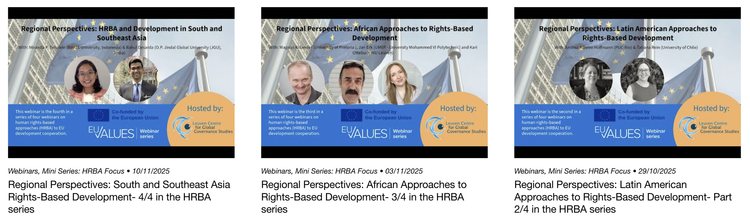
In addition to our monthly webinar events, the EU-VALUES Network, in partnership with the Leuven Centre for Global Governance Studies, has concluded a four-part webinar series on Human Rights-Based Approaches (HRBA) to EU development cooperation. Across the sessions, speakers explored how HRBA frameworks translate into practice - from a global overview to regional perspectives from Latin America, Africa, and South and Southeast Asia - highlighting key themes such as health, gender equality, equity, accountability, and governance. All webinar recordings are now available, and we warmly invite you to (re)watch the series and explore the insights shared by our distinguished speakers and discussants. Catch up on the HRBA series and all our webinars on our website here.
|
What’s Coming Up Next for the EU-VALUES Network?
|
|
|
|