|
$$PLAIN_TEXT_PREVIEW$$
The EU-VALUES Newsletter Issue 9
|
Preserving Peace, Freedom and MultilateralismFrom the COVID-19 pandemic and the war in Ukraine to the escalating climate crisis and beyond, recent years have exposed the fragility of the rules-based international order and underscored the urgent need for effective multilateral cooperation. As the world becomes increasingly multipolar and great power competition intensifies, the European Union must navigate a complex geopolitical landscape while remaining true to its founding principles. This requires not only reinforcing existing multilateral institutions and norms, but also building new coalitions and partnerships to address emerging threats and challenges. The EU's efforts to promote multilateralism extend across a wide range of policy areas, from climate action and sustainable development to human rights and conflict prevention. However, it’s ability to project its values and interests on the world stage is not without its limitations and contradictions. Internal divisions, bureaucratic constraints, and sometimes ambivalent relationships with other major powers can hinder its effectiveness as a global actor. In this edition of the EU-VALUES newsletter, we explore the EU's efforts to reinforce the multilateral system and its institutions amidst growing global challenges. We draw upon recent research to examine the EU's role in promoting the core values of multilateralism and the impact of geopolitical events on the resilience of international institutions. Furthermore, we collate expert assessments of the EU's effectiveness in pursuing its Treaty objectives related to multilateralism, its relationship to the liberal international order, and the prospects of a "geopolitical Europe" in an increasingly multipolar world. By bringing together these research-informed perspectives, we aim to shed light on the opportunities and obstacles facing the EU as it navigates the changing landscape of multilateralism in the 21st century.
|
What Does the EU Stand For?
Ian Manners on Values, Power, and Legitimacy
|
|
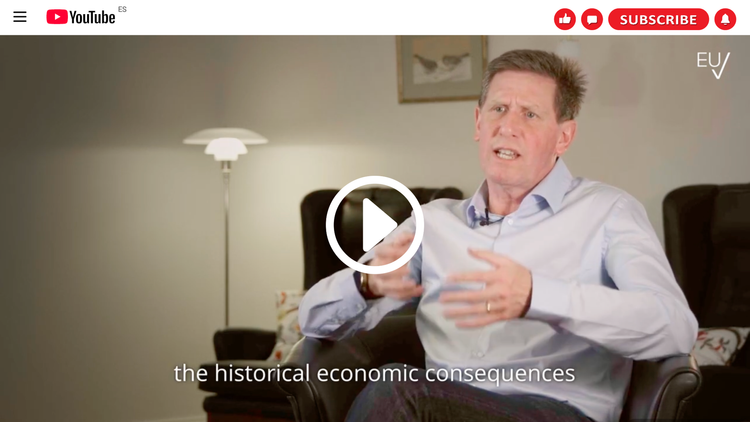
Prof. Ian Manners of Lund University revisits the concept he helped define - Normative Power Europe - to examine what it really means for the EU to shape global norms through its values and policies. He explores which values the EU genuinely embodies on the world stage, beyond its own rhetoric, and how far these values hold up under scrutiny. As debates over democratic backsliding, colonial legacies, and the return of coercive power politics reshape the global order, Professor Manners also addresses a pressing question for European policymakers: can a values-based power like the EU remain credible, and relevant, in a world where force increasingly speaks louder than norms?
|
Dive into more expert interviews with EU-VALUES Talks:
|
Russia’s War, Europe’s Test: Multilateralism, Security, and Belarus with Tadeusz Iwanski
|
|

|
|
|
|
What Japan thinks about European values, and why it matters now with Prof. Maiko Ichihara
|
|

|
|
|
|
Recent Publications on the EU’s Multilateral Agenda
|
|
Multilateralism, the cooperation between three or more states through international institutions, is facing significant challenges in the current geopolitical landscape. Recent conflicts, contested institutions, and the resurgence of geopolitical tensions are transforming the way states collaborate on a global scale. D'Alessandra and Gildea (2025) argue that multilateralism is underpinned by core, non-instrumental values such as a spirit of collectivity, inclusivity over exclusivity, and negotiated governance. These values are essential for maintaining a stable and cooperative international order. However, the traditional model of multilateralism is being tested by the growing relevance of informality in multilateral practice, as highlighted by Lovato (2026). The EU finds itself at the epicenter of this transformation. As a prominent proponent of 'effective multilateralism' for decades, the EU now faces the challenge of adapting to an age of uncertainty (Jørgensen et al., 2025). The Union's role in promoting multilateralism is complicated by the increasing importance of regional institutions in global peace operations (Fawcett, 2025) and its own evolution into a geopolitical actor. Since 2019, the EU has been operating with a 'Geopolitical Commission,' signaling a shift in its approach to international affairs (Kissack, 2026). The strain on multilateralism is further exacerbated by recent events such as Russia's invasion of Ukraine, which has tested the resilience of international institutions like the G20 and challenged the existing world order (Makarychev & Wicaksana, 2025). As the global power dynamics continue to shift, the EU must navigate a complex web of relationships and adapt its foreign policy to ensure the survival of multilateralism. Lovato (2026) emphasises the significance of informality in EU foreign policy-making, arguing that it plays a crucial role in maintaining multilateralism in the face of adversity. In conclusion, the current state of multilateralism is marked by uncertainty and the resurgence of geopolitical tensions. The EU, as a key player in the international arena, must recalibrate its approach to promoting multilateralism while navigating the challenges posed by regional conflicts, contested institutions, and the growing relevance of informality in multilateral practice. The future of multilateralism depends on the ability of international actors, including the EU, to adapt to the changing geopolitical landscape and uphold the core values that underpin cooperative global governance. For a curated selection of recommended publications, scroll down to the "Literature" section at the end of this email. And if you haven't explored it yet, be sure to visit the newly launched EU-VALUES Repository.
This comprehensive database features hundreds of publications from our Network partners, covering a wide range of topics related to the EU's external action, values, and multilateral engagement.
|
More updates from across our Network:
|
|
As debates around peace, security, democracy, and multilateral cooperation continue to evolve, our EU-VALUES Blog offers timely reflections on some of the most pressing challenges facing Europe and the international community:
|
|

|
In Europe’s Far Right Under Strain, Prof. Catherine E. De Vries examines how geopolitical crises, economic pressures, and shifting voter priorities are reshaping Europe's far-right movements. The piece explores the implications of these changes for democratic governance and political stability across the continent. |
|
|
|
|

|
In Understanding the War on Iran: Geopolitics, Europe, and Global Risk, Ramin Jahanbegloo analyses the wider consequences of the conflict involving Iran and the US–Israel coalition. Reflecting on Europe’s commitment to diplomacy, peace, and international law, the article raises important questions about regional security, conflict escalation, and the future of multilateral approaches to crisis management. |
|
|
|
|
|
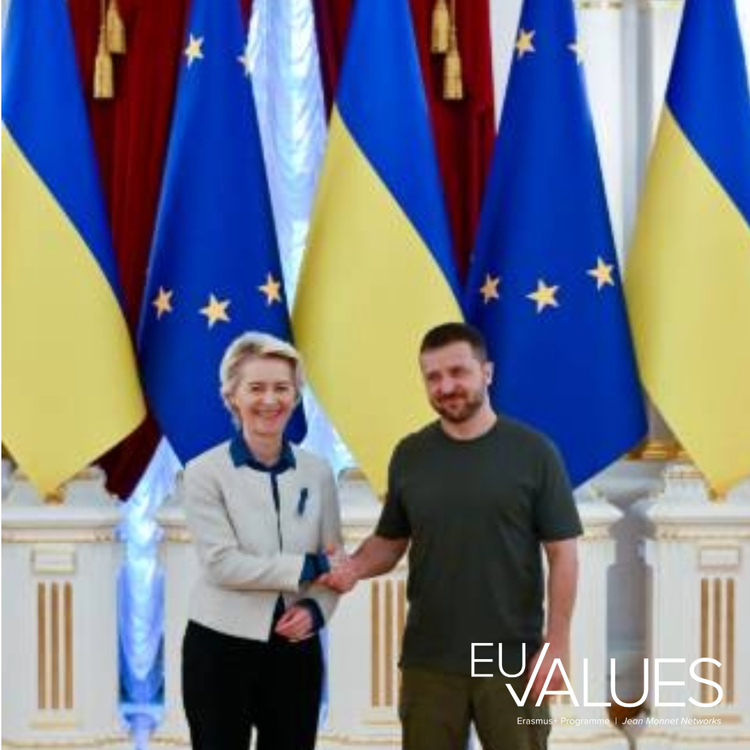
In Between a Rock and a Hard Place: Von der Leyen and the EU’s Enlargement to Ukraine, Dr. Seçkin Barış Gülmez examines how Russia’s war against Ukraine has transformed EU enlargement into a strategic instrument of security and foreign policy. The analysis highlights how enlargement is increasingly framed as a means of safeguarding peace, stability, and the European project itself. |
|
|
Catch up on EU-VALUES Webinars:
|
|
The internet doesn't belong to everyone equally, and the fight over who gets to set its rules is already well underway. Columbia Law School Prof. Anu Bradford breaks down the three competing visions reshaping the digital world: the US market-driven model, China's state-directed approach, and the EU's rights-based framework. Drawing on her acclaimed book Digital Empires, Bradford argues that regulation has become a form of geopolitical power, and that Europe's influence is far greater, and more contested, than most people realise. From AI governance to data privacy and platform accountability, the stakes couldn't be higher. Bradford is joined by two expert discussants from Lund University: Elsa Hedling, Associate Senior Lecturer in European Studies and Political Science and Peter Gottschalk, Associate Senior Lecturer in Human Rights, Intellectual Property and Trade Law. Subscribe to our YouTube channel and be the first to know when new videos go live! Some other recent fantastic sessions include:
|
On the European Dialogue Podcast:
|
Unravelling Member States' Politics: Inside the EU's Rule of Law Battles Dr. Gisela Hernández discusses the EU's rule of law battles, exploring how the Ukraine war, member state challenges, polarization, and party politics impact European democracy's future, and offers insights on compliance and strategic enforcement within the Union.
Listen Here. |
|

|
|
|
|
Other great episodes you may find interesting:
|
What’s Coming Up Next for the EU-VALUES Network?
|
|
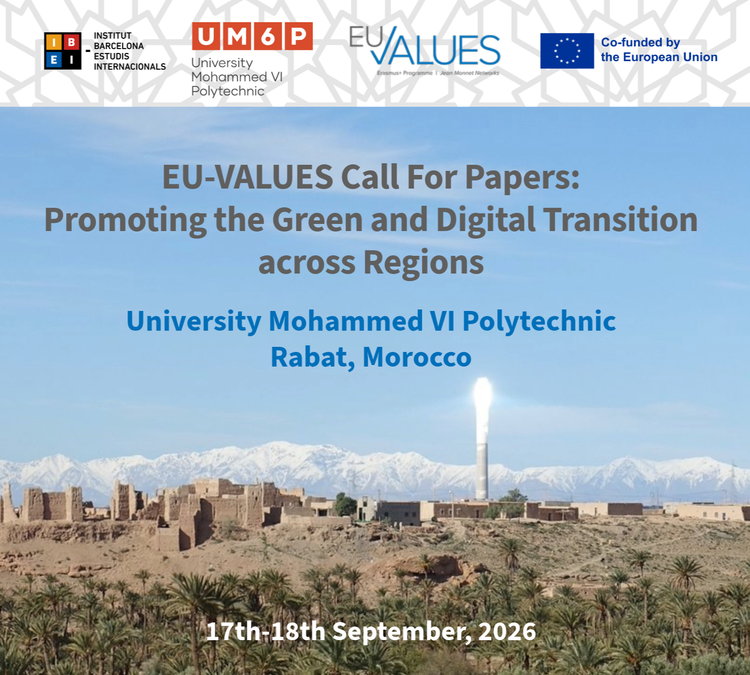
We are excited to meet participants at our final EU-VALUES International Conference this coming September, which will be hosted by the University Mohammed VI Polytechnic in Rabat, Morocco. If you are not able to attend in person, don’t worry - we will be live streaming select sessions on our YouTube and Instagram and LinkedIn accounts. Please follow us on these platforms to stay updated on the conference proceedings and to access the live streams. The conference panels and agenda will be released shortly, so stay tuned for more information.
|
Literature mentioned in this issue:
|
|
|
D’Alessandra, F., & Gildea, R. (2025). Values and multilateralism in world politics. The British Journal of Politics and International Relations, 27(2), 643-657. |
|
|
|
|
|
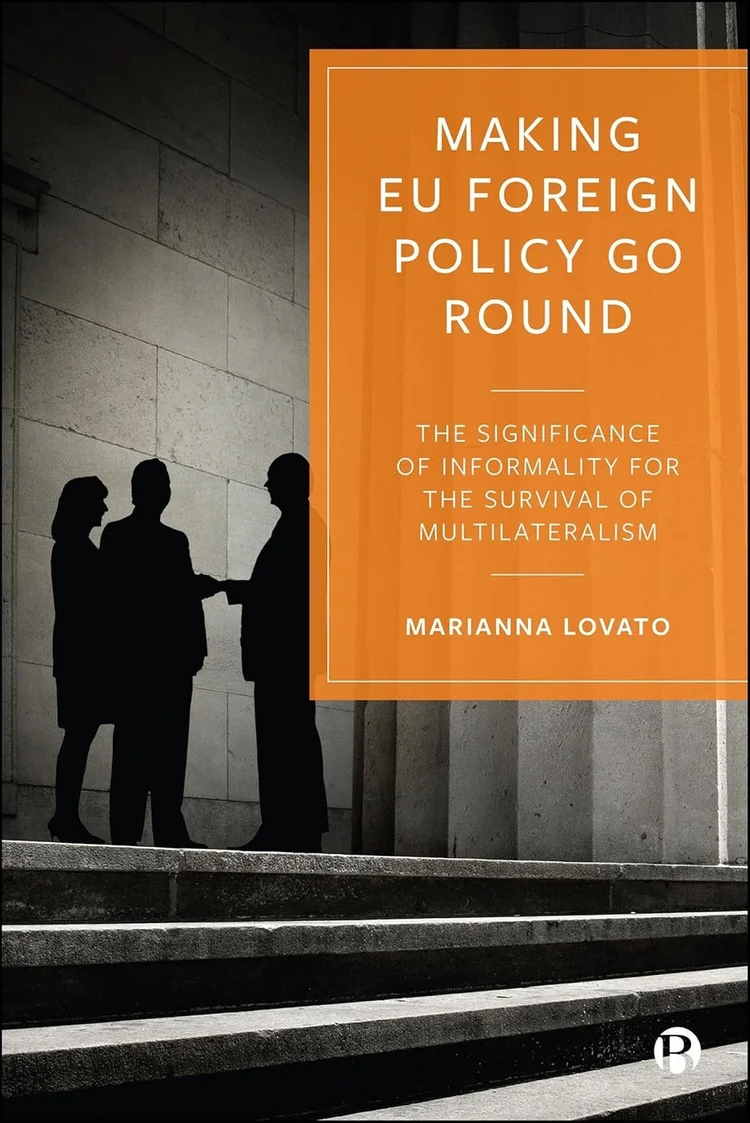
Lovato, M. (2026). Making EU Foreign Policy Go Round: The Significance of Informality for the Survival of Multilateralism. Policy Press. |
|
|
|
|

|
Kissack, R. (2026). The ‘Geopolitical Commission’: 40 Years in the Making?. JCMS: Journal of Common Market Studies. |
|
|
|
|
|
Fawcett, L. (2025). The changing regional faces of peace: Toward a new multilateralism?. Contemporary Security Policy, 46(2), 372-401 |
|
|
|
|
|
Makarychev, A., & Wicaksana, I. G. W. (2025). Multilateralism at War: Russia’s Invasion of Ukraine, the G20 and World Order. Global Society, 39(2), 181-202. |
|
|
|
|
|
Ergül Jorgensen, F. A., & Jørgensen, K. E. (2025). The European Union and the crisis of multilateralism in an era of uncertainty and power politics. Third World Quarterly, 46(15), 1959-1978. |
|
|
|
|
|
|