
How the EU Is Reshaping Freedom of Expression Around the World
From Socratic courage to algorithmic moderation, Europe is exporting a distinctive model of free speech - one that protects dissent while regulating the conditions in which speech circulates.
Freedom of expression is often imagined as a shield: the individual speaks, and the state must step back. Europe’s tradition is more demanding. It begins with Socrates’ willingness to question authority even at personal cost, develops through what Michel Foucault called parrhesia - fearless truth-telling - and reappears in Émile Zola’s “J’accuse”, an act of public speech against institutional injustice. Erasmus made reasoned dialogue an antidote to fanaticism; John Stuart Mill argued in On Liberty that even error can force truth to explain itself; Albert Camus insisted that intellectual responsibility means siding with human beings against oppression.
This inheritance treats speech as both liberty and civic practice. The question is not only whether a person may speak, but whether citizens can challenge domination, receive reliable information and participate as equals in public life. That idea now sits at the centre of the European Union’s growing influence over the global information order.
A right, but not an absolute
Article 11 of the EU Charter of Fundamental Rights protects the right to hold opinions and to receive and impart information. Crucially, it also protects media freedom and pluralism. Speech is therefore more than the speaker’s autonomy: it includes the listener, the journalist, the artist, the scholar and the institutions that allow competing ideas to be heard.
The European approach is robust but not absolutist. In Handyside v United Kingdom, the European Court of Human Rights famously recognised that democratic society must tolerate ideas that “offend, shock or disturb.” Yet restrictions may still be lawful when they pursue a legitimate aim and are necessary and proportionate. The same structure appears in Article 19 of the International Covenant on Civil and Political Rights and the UN Human Rights Committee’s General Comment No. 34.
This balancing model distinguishes Europe from both strong American-style speech libertarianism and authoritarian information control. It promises a public sphere in which expression coexists with privacy, dignity, equality, reputation and security. Its difficulty is deciding who performs the balancing - and how.
Europe’s greater willingness to regulate hate speech also reflects its historical memory of fascism, genocide and racial persecution. The aim is not simply to protect people from offence, but to prevent intimidation and organised abuse from excluding minorities from equal participation. Yet the threshold matters. Set it too low and necessary controversy disappears; set it too high and the loudest or most threatening actors can capture the public sphere.
Europe’s borders do not contain its rules
The EU shapes speech globally through courts, diplomacy, conditionality and, increasingly, the sheer gravitational pull of its market.
Its courts have already redrawn the boundaries of communication. In Digital Rights Ireland, the Court of Justice struck down indiscriminate communications-data retention, recognising a rights intrusion that can also chill speech. In Google Spain, it required search engines in certain circumstances to delist personal information, strengthening informational self-determination while narrowing public access to lawful material.
Territory then became the harder problem. In Google v CNIL, the Court resisted making European de-referencing automatically global. But in Glawischnig-Piesczek, it allowed courts to order removal of identical and equivalent unlawful content, potentially worldwide. Together, the cases reveal an unresolved dilemma: can Europe protect rights across borders without exporting its own constitutional compromises to people who had no voice in making them?
Anu Bradford calls this market-driven diffusion the “Brussels Effect.” Global companies often apply EU rules beyond Europe because one high standard is cheaper than maintaining multiple systems. The Digital Services Act now pushes major platforms to explain moderation decisions, provide complaints processes and assess systemic risks, including threats to fundamental rights. That can make private speech governance more transparent. It can also create a compliance architecture that rewards automated, precautionary over-removal. As scholarship on fundamental rights in platform terms and conditions warns, rights language may constrain Big Tech - or merely legitimise its power.
Freedom needs institutions, not only restraint
The EU’s newer laws recognise that governments are not the only actors capable of silencing speech. The European Media Freedom Act addresses editorial independence, ownership transparency, state advertising and spyware. The anti-SLAPP Directive creates safeguards against abusive cross-border litigation aimed at journalists, activists and public watchdogs. These measures move beyond “do not censor.” They ask what material and institutional conditions make expression possible.
Abroad, the EU uses human-rights dialogues, development funding, trade preferences and enlargement conditionality to press for journalist safety, open civic space and independent media. Its Human Rights and Democracy Action Plan, extended to 2027, embeds these aims across external policy. Candidate countries in the Western Balkans and Türkiye are regularly assessed on media pluralism and political pressure on journalists.
But conditionality works only when membership is credible, domestic reformers have room to act and geopolitical bargains do not eclipse democratic standards. If migration, energy or security partnerships mute criticism, Europe’s rights diplomacy begins to look selective.
The security test
The sharpest tension emerged after Russia’s invasion of Ukraine, when the EU suspended RT and Sputnik broadcasting. In RT France v Council, the General Court upheld the measures in the exceptional context of war, stressing their temporary character and public-order rationale.
The decision captures the EU’s central dilemma. Coordinated propaganda, foreign interference and deepfakes can corrode democratic choice. Yet treating hostile information primarily as a security threat may normalise exclusion from the public sphere. The line between resisting manipulation and suppressing an unpopular viewpoint must remain visible, reviewable and proportionate.
Artificial intelligence, recommender systems and automated moderation will intensify this struggle. Europe’s distinctive contribution is not a finished answer but an experiment: protect fearless speech, distribute communicative power, and regulate the infrastructures that decide what the world sees. Its success will depend less on how many rules it exports than on whether those rules preserve dissent, constrain both public and private power, and remain open to voices beyond Europe.

Rahul Desarda is an Assistant Lecturer and the Assistant Director of the Mahatma Gandhi Centre for Peace Studies at Jindal Global Law School, Delhi, India - a partner institution of the EU-VALUES Network. He earned his LL.M. in International Law from the Fletcher School of Law and Diplomacy at Tufts University as a Fletcher Committee Scholar, cross-registering at Harvard Law School under the Tufts-Harvard collaboration. He has worked under Professor Carlos Alvarado Quesada, former President of Costa Rica, and Professor James Kraska of Harvard Law School, and clerked for Justice David Unterhalter of the Supreme Court of South Africa. A three-time Jessup Moot Court international qualifier and Best Mooter awardee, his research spans peace studies, international human rights law, and the law of the sea.
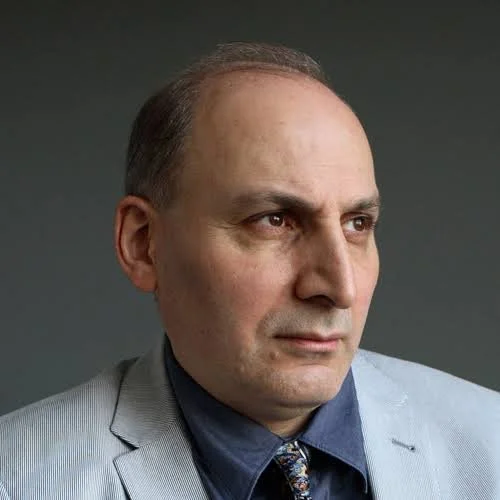
Prof. Ramin Jahanbegloo is a political philosopher and the Executive Director of the Mahatma Gandhi Centre for Nonviolence and Peace Studies, as well as the Vice-Dean of the School of Law at Jindal Global University in Delhi, India - a partner institution of the EU-VALUES Network. He earned his Ph.D. in Philosophy from Sorbonne University and has taught at various institutions, including the University of Toronto and York University. He has has written over 27 books and received several awards, including the Peace Prize from the United Nations Association in Spain and the Josep Palau i Fabre International Essay Prize. Find out more about our partner here: O.P. Jindal Global University (JGU)
The opinions expressed in this blog are solely those of the author and do not reflect the views of EU-VALUES Network.